
Mobile-free school — The big guide for teachers
The way to cellphone-free school
Cell phones in class are the biggest challenge for modern schools. They interfere with concentration, promote cyberbullying and prevent real social interaction.
This guide shows you how to use the LockStA system In just a few weeks, a stress-free, focused learning environment create — legally secure, educationally valuable and cost-effective.
I. The roadmap: The steps for a successful implementation
A uniform approach and a clear concept ensure acceptance of the system by parents, students and colleagues.
Step 1: Decision and Educational Foundation
Before the first bags are distributed, the base must stand.
- Decision: Get the school conference, the college and ideally the parent representatives on board early on. Consensus is the key to success.
- Rulebook: Define precise rules in school regulations. Determine: When (e.g. upon entering the premises), Where (entire school grounds) and How long The mobile phone must remain in the case.
- Communication: Explain to all parties involved that the measure Improved learning culture and is not a punishment.
- The principle: The mobile phone case takes pressure off teachers and students alike. Students are freed from the constant temptation (“fear of missing out”), while teachers can concentrate on their core task again.
Step 2: Financing & Procurement
The LOCKSTA system is an investment in better education. Clarify the reimbursement of costs at an early stage.
- Model A (school board/school budget): The school buys the bags and lends them out like school books (free of learning materials).
- Model B (parent financing): Parents pay a one-time fee or rent (e.g. 15—20 € per bag).
- Model C (sponsorship): Local banks, foundations or support associations are often happy to support the project under the aspect of “promoting the mental health of young people.”
II. The daily routine
We rely on personal responsibility. Unlike cell phone garages or central storage areas in the classroom, the LOCKSTA bag is treated like a school book or a calculator. It is the student's personal work material.
1. The basic rule: “Bring Your Own Pouch”
- Responsibility: Each student receives their own bag. He is responsible for the condition and for bringing them along on a daily basis. Each LOCKSTA bag has space for an individual name tag for clear identification.
- Routine in the morning: Before entering the school building (or at the latest before the first hour), the mobile phone is self-employed muted, put in the pocket and closed.
- storage: The locked bag remains in the student's possession (in the backpack or in the pocket) throughout the school day.
2. Educational flexibility: use in class
A complete digital ban is out of date. The system allows the targeted use of digital tools:
- Project work: When smartphones are needed for research, a video project or an AR application, the teacher can open the bags with a mobile handheld lock device.
- After the unit: As soon as the digital phase is over, the cell phones are locked again in the classroom.
- advantage: The mobile phone is changing from a permanent “interference factor” to a targeted “work tool.”
3. The safety net: Samples & consequences
Trust is good, control ensures the success of the system. Since the bags are not collected, visual checks are essential.
- The visual inspection: At the beginning of the lesson or in between, teachers ask on a random basis: “Please show/place all the closed bags on the table.”
- Dealing with “forgetters”:
- scenario: A student left his bag at home.
- Consequence: Since he cannot use the “system”, the mobile phone must be dropped off at the secretariat or teachers' room for that day.
- Learning effect: Bringing the bag quickly becomes routine so that you can “keep” your mobile phone.
- Attempts to deceive: If empty bags are closed (while the cell phone is stuck in a sock, for example) or dummies are used, the school's regular catalog of measures (reprimand, parental consultation) applies.
4. End of school: Check-out
The process comes to a relaxed end when you leave school.
- location: There are permanently installed unlocking stations at the exits of the school building.
- Expiration: When leaving school, the student opens their bag by themselves as they pass by and can use the device again.
This is how cell phone cases work
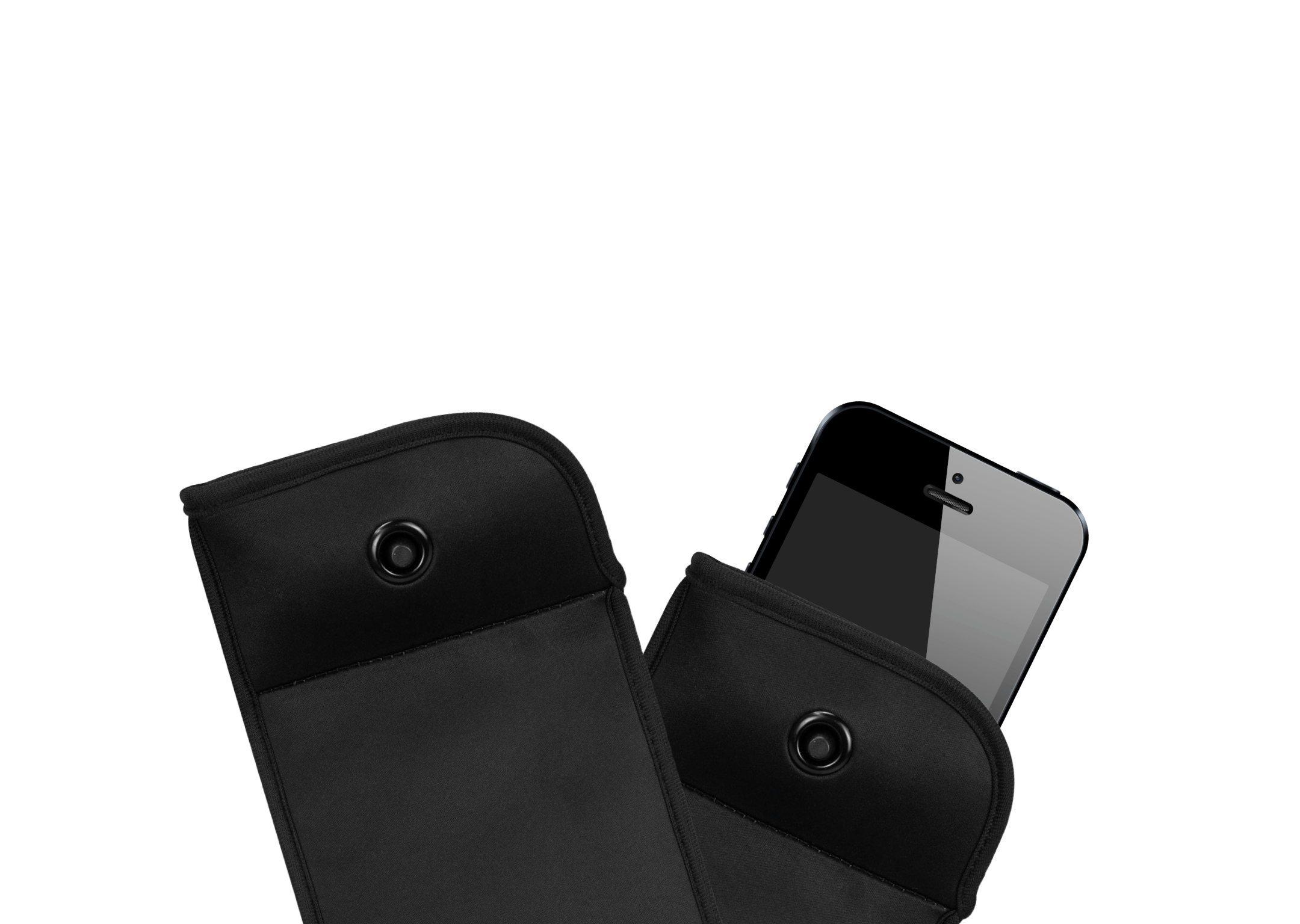
The mobile phone is placed in the LOCKSTA case and locked. It can only be opened with the special LOCKSTA Opener. In this way, students, employees or guests remain focused, conversations confidential and moments undisturbed.


Store your smartphone securely
The cell phone remains in the possession of students, employees or guests and yet distractions, attempts at fraud or photos are prevented.

Close the case with the push of a button
A simple push button closes the LOCKSTA case. The case cannot be opened within the cellphone-free zone.

Simply hold the opener to open
The opener is placed outside the cellphone-free zone (e.g. at the exit). This allows everyone to open the case independently.
Inquire now
Interested in LOCKSTA? Fill out the form now and together we will find the right solution for you! We'll get back to you as soon as possible.
