
Mobile phone ban in schools in Germany 2026: All rules in all 16 federal states
The theme Cell phone ban in schools Germany is moving like never before. More and more federal states are tightening their rules on smartphone use in everyday school life — some are already banning cell phones across the board, others are leaving the decision to schools. It is often difficult for school administrators, teachers and parents to keep track of things: What regulations apply in my federal state? Are schools allowed to move in cell phones? And how can a mobile phone ban be implemented sensibly in practice?
This article gives you an up-to-date and complete overview of mobile phone regulations in all 16 federal states (as of March 2026) and shows which solutions schools can use for a cellphone-free learning environment.

Summary: Where does Germany stand when it comes to the mobile phone ban?
There is no uniform federal regulation on the mobile phone ban in schools in Germany. Since education law is the responsibility of the individual federal states, each state has developed its own approach. While Bavaria, Hesse, Bremen and Schleswig-Holstein have introduced comprehensive legal bans, other countries such as Berlin, Hamburg or Saxony-Anhalt continue to rely on individual schools' personal responsibility.
However, the trend is clear: The majority of federal states are moving towards stricter regulation. The background is growing scientific findings: A much-noticed study by the University of Augsburg from 2025 confirms that Smartphone bans have a measurable positive effect on social well-being and learning performance from students — especially when they receive pedagogical support. The PISA study also shows that in Germany, one in four young people in class feels under pressure to respond to messages. 38 percent of students say that they are distracted by their smartphones in class.
As of March 2026, the situation can be divided into three categories:
Statewide bans by law or regulation. Schools must comply — no room for manoeuvre.
schools Do binding mobile phone rules have to enacted. No laissez-faire — but the school decides the scope.
No nationwide bans. Schools regulate the use of cell phones on their own responsibility through school regulations.
Summary: Where does Germany stand when it comes to the mobile phone ban?
As of March 2026, the situation can be divided into three categories:
The trend is clear: More and more federal states are taking action
Developments over the past 18 months point to a clear direction: The ban on mobile phones in schools is no longer a niche issue, but an educational policy consensus.
- 2024: Bavaria eases its existing ban on primary schools; discussions at conference of ministers of education
- March 2025: Hesse announces smartphone protection zones; NRW calls on all schools to comply with mobile phone regulations
- June 2025: BW passes school law amendment; Hesse passes law in state parliament
- August 2025: Hesse, Bremen, Schleswig-Holstein start the school year with new regulations
- December 2025: BW state parliament passes law; Bavaria plans tightening up to class 7
- February 2026: Saxony introduces mobile phone ban at primary schools
- International: Austria (since May 2025), Finland, Denmark, the Netherlands, France also have bans
Why more and more schools are banning mobile phones
The reasons why schools opt for a cellphone-free environment are varied and are supported by current research:
Better concentration and learning outcomes
An English study from 2016 found that schools banned mobile phones achieved significantly better test results. Low-performing students benefited particularly strongly — the effect was roughly equivalent to one additional lesson per week. The PISA study confirms that distraction caused by smartphones is one of the most common disruptive factors in teaching.
Strengthening social skills
Without smartphones, students spend more of their breaks together again: They talk, play and move more. Schools report a significantly improved social climate following the introduction of a mobile phone ban. The difference is particularly noticeable in lower and middle school.
Preventing cyberbullying
Cyberbullying is one of the most pressing problems in German schools. If smartphones are not accessible during school hours, the risk of students being photographed, filmed or bullied online at school decreases. Mobile-free schools create a safe space where children and young people can feel safe.
Less stress and better wellbeing
One in four young people feels pressure to respond to messages in class. Breaking through this permanent availability stress is an important contribution to mental health. An overview study by the University of Augsburg (2025) shows that smartphone bans measurably improve both social well-being and learning performance.
Implementing a mobile phone ban: Practical solutions for schools
Deciding on a mobile phone ban is the first step — the decisive question is how it works in practice in everyday school life. Schools face a number of challenges: Where are the devices stored during the school day? How can the ban be enforced easily and stress-free? And what happens in the event of violations?
Lockable cell phone cases: The modern solution
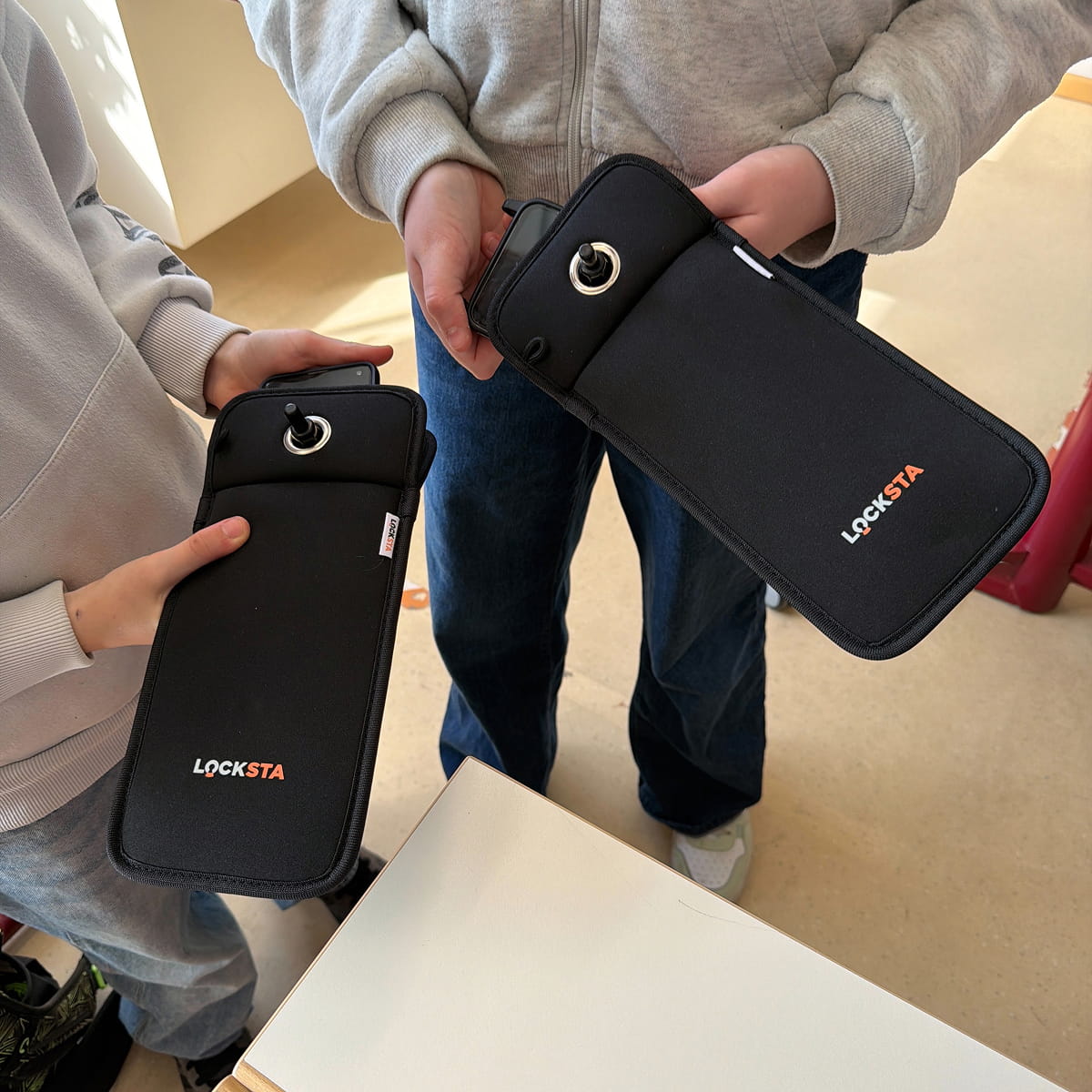
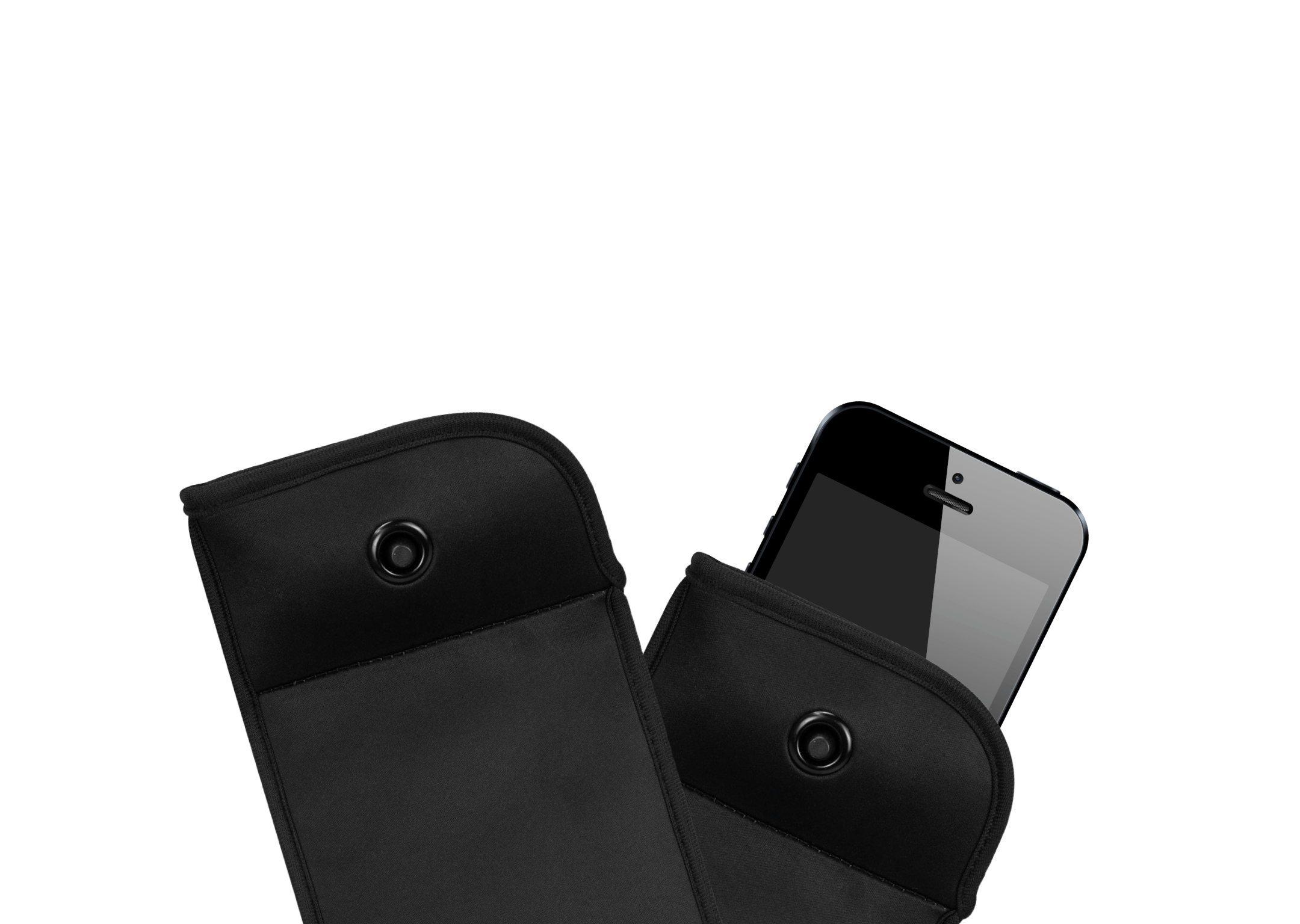
More and more schools in Germany rely on lockable Cell phone cases with magnetic closure as a practical and easy solution. The principle is simple: Each student receives their own mobile phone pocket in which the smartphone is securely stored and locked. The bag remains with the student — the mobile phone is therefore handy in case of an emergency, but cannot be used. Only at the end of the school day is the bag opened with a special magnet.
This concept has decisive advantages over alternatives such as cell phone cabinets, mobile phone garages or collection by teachers:
• No need to collect: Teachers save valuable lesson time because the storage is done by the students themselves.
• No liability issues: Since everyone keeps their own device, there is no question of who is liable for damage or loss — a common problem with centralized storage solutions.
• Emergency access ensures: In the event of a medical or safety-related emergency, the bag can be opened immediately.
• Targeted use of lessons is possible: If a teacher wants to use the smartphone in class, the bags can be opened temporarily.
• Durable and sustainable: High-quality cell phone cases last several years of school and cost significantly lower costs than electronic locker systems or jammers.
Cell phone cases vs. cell phone cabinets vs. jammers: Which is best?
Schools that want to implement a mobile phone ban are faced with various options. Cell phone cabinets and cell phone garages are one option, but they have practical disadvantages: They are expensive to buy, require space, and the logistics of loading and outgoing costs valuable lesson time every day. In addition, the school assumes liability for the equipment collected.
Jammer stations are illegal in Germany and are not an option. They not only block student cell phones, but also emergency calls and other legitimate radio connections.
Lockable mobile phone cases with magnetic closure offer the most elegant solution: cost-effective, easy to use, and can be used immediately in any classroom — without structural changes, without IT infrastructure and without risk of liability for the school or teachers.
The solution that works in every federal state
Regardless of whether your federal state has a legal ban, an obligation to regulate or gives schools free rein - LOCKSTA works everywhere:
LOCKSTA makes the ban physically enforceable — without discussion
LOCKSTA is the practical implementation method for your mobile phone regulations
LOCKSTA provides your school with a proven system
Frequently asked questions about the mobile phone ban in schools
No Since education in Germany is a matter for the state, there is no uniform federal regulation. Each of the 16 federal states decides for themselves. A nationwide ban is currently not planned, although it is being discussed at the Conference of Ministers of Education and Cultural Affairs.
Hesse and Bremen have the strictest regulations with nationwide bans, which also include breaks and school grounds. Schleswig-Holstein prohibits use up to class 9. In Bavaria, Brandenburg, Saxony, Saarland and Thuringia, there are bans at elementary schools.
Yes, in all federal states, teachers are allowed to temporarily move in smartphones if they disrupt lessons or school regulations. The devices must usually be returned at the end of the school day. In BW, it is also possible to return the product only to the parents in the event of repetition.
No Operating jammers (whining) in Germany is prohibited and punishable under the Telecommunications Act. This also applies to schools. Jammers also block emergency calls and jeopardize security. The legal alternative: lockable mobile phone cases with optional signal blocking, as offered by LOCKSTA.
Studies by the University of Augsburg, the London School of Economics and the OECD show: Mobile phone bans measurably improve learning performance - especially among lower-performing students (up to 6% better test scores). Social well-being and the quality of personal interaction are also increasing. Read more about this on our Study page.
Inquire now
Interested in LOCKSTA? Fill out the form now and together we will find the right solution for you! We'll get back to you as soon as possible.
